
Expat Life: Why Brits are Moving to Bulgaria
The New Frontier for British Expats
For decades, teh Mediterranean coast served as the default retirement plan for British citizens seeking sunshine and cheaper wine. Spain and France absorbed waves of expatriates until the coastal property markets saturated and the cost of living crept upward. Today, a different demographic of UK migrants is turning its attention eastward toward the Balkan Peninsula. They are trading crowded beaches for the rugged isolation of rural Bulgaria, driven by a desire for financial freedom and a profound shift in lifestyle.
This is not a temporary migration of digital workers. It is a sustained movement of retirees, young families, and remote professionals purchasing property outright. The appeal lies in a landscape defined by dramatic mountain ranges, deep-rooted agricultural traditions, and an economic environment where the British Pound still commands serious purchasing power. For those willing to adapt to a new alphabet and a starkly different bureaucratic system, Bulgaria presents an opportunity to rebuild a life on far simpler terms.
The Cost of Living Advantage
The financial mathematics of relocating to Eastern Europe are difficult to ignore. Bulgaria officially adopted the Euro in 2026, providing a measure of economic stability that reassures foreign buyers. Rent, council taxes, and daily utilities cost a fraction of their UK equivalents. A sprawling village house requiring renovation can often be secured for the price of a mid-range family car back in Britain.
| Expense Category | UK Average (GBP) | Bulgaria Average (EUR) |
|---|---|---|
| Rent (1-bed apartment) | £900 – £1,500 | 200 – 400 EUR |
| Utilities (Electric/Water) | £200 – £300 | 75 – 125 EUR |
| Dining Out (Mid-range) | £50 – £80 | 20 – 35 EUR |
| Internet/Broadband | £30 – £50 | 10 – 18 EUR |
While inflation has affected global markets, the baseline expenses here remain highly competitive. However, securing this financial advantage requires navigating post-Brexit legalities. UK citizens are now classified as Third Country Nationals. Securing long-term residency requires proof of sufficient income—such as a guaranteed pension or remote salary—along with comprehensive health insurance. The Ministry of Interior’s Migration Directorate strictly enforces these requirements, demanding rigorous paperwork before issuing the coveted ‘lichna karta’ (residence card).
Regional Hubs: Where the British Settle
Expatriates rarely scatter at random. They cluster around reliable infrastructure, forming quiet enclaves that eventually support English-speaking tradesmen and community groups. When researching the safest cities in Bulgaria, new arrivals frequently bypass the immediate capital in favour of regional capitals that offer a slower pace without sacrificing basic amenities.
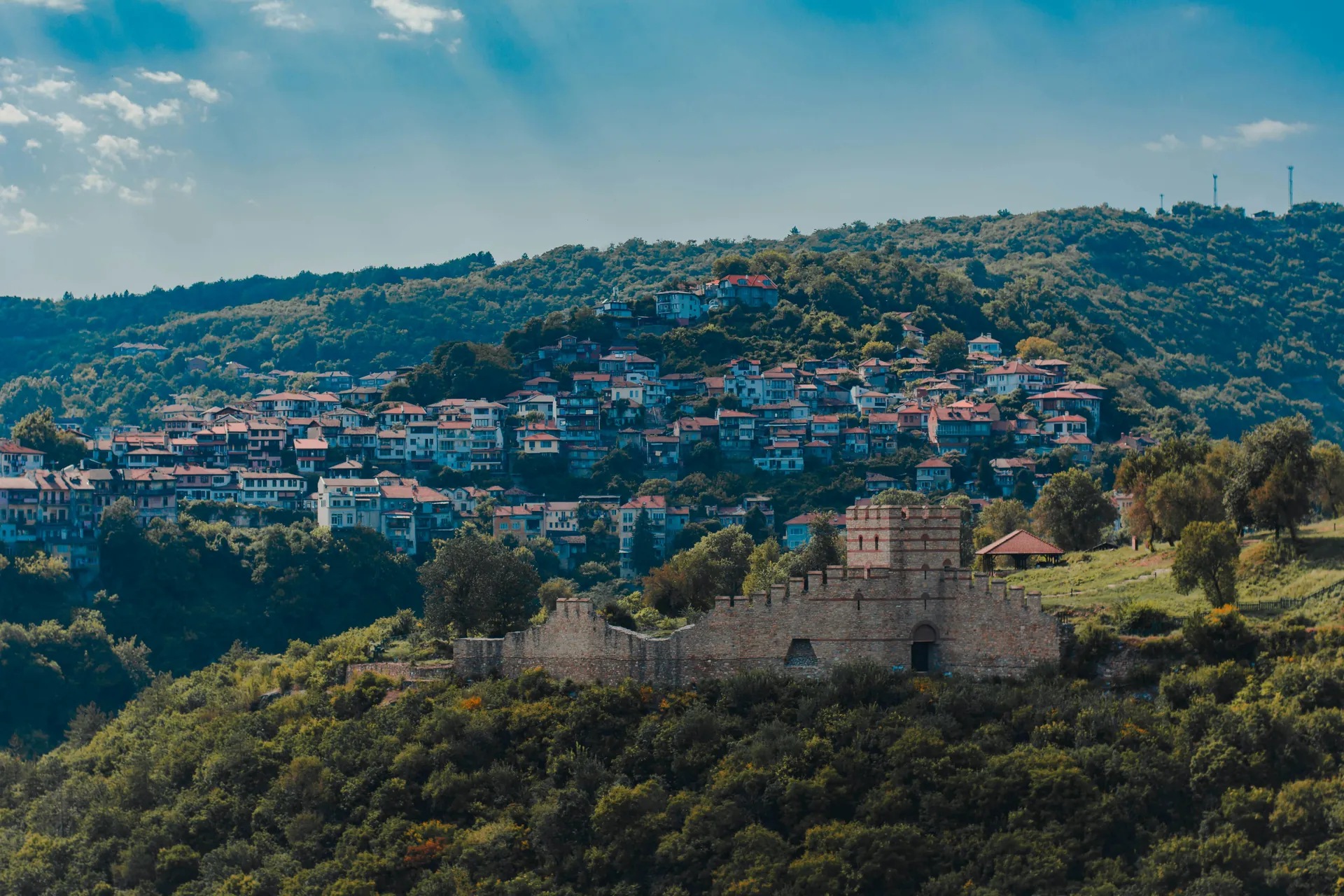
Veliko Tarnovo
The historical capital of the Second Bulgarian Empire operates as the primary anchor for British expats. The surrounding villages offer cheap property while the city itself provides excellent private healthcare clinics, international supermarkets, and a high degree of safety. The steep, winding streets overlook the Yantra River, offering an architectural aesthetic that feels remarkably distant from modern urban sprawl.
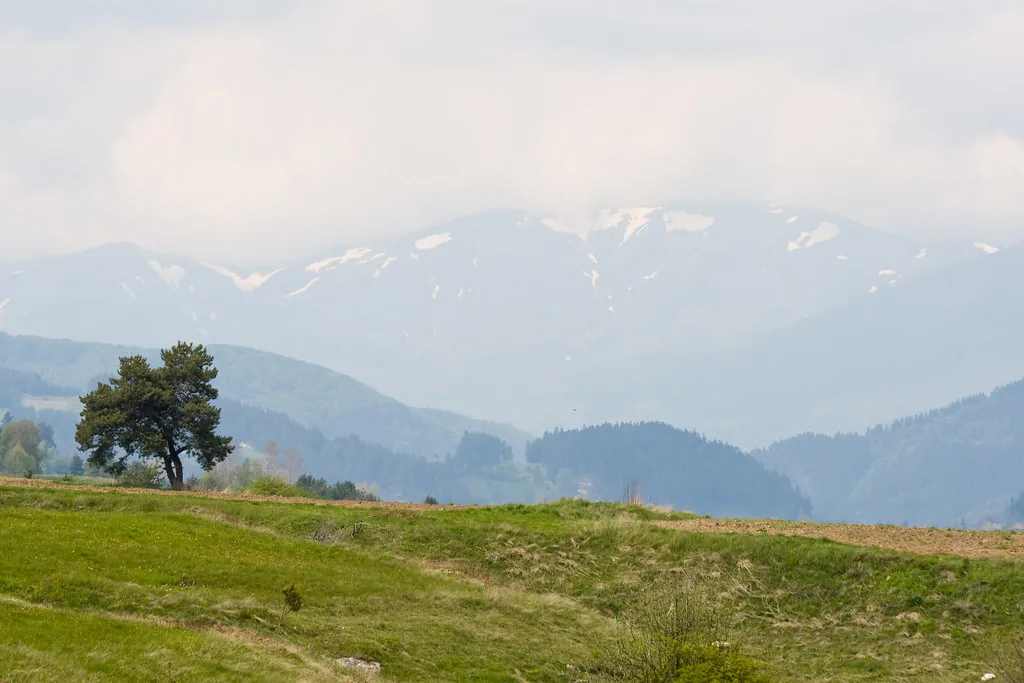
Balkan Mountain Villages
Further south, the towns of Kazanlak and Stara Zagora draw those seeking immediate access to raw nature. This region is defined by the Rose Valley and the towering peaks of the Central Balkans. Buyers here are usually undertaking massive renovation projects, transforming abandoned stone structures into modern, eco-friendly homes. The rural isolation is profound, offering a complete detachment from the relentless pace of British corporate life.
Infrastructure, Healthcare, and Connectivity
A common misconception regarding Eastern Europe involves crumbling infrastructure. The reality on the ground is highly nuanced. Bulgaria maintains some of the fastest, most reliable fibre-optic networks in the world. Rural villages that lack a central sewage system often possess gigabit internet connections. This digital backbone is exactly what allows younger British families to sustain remote employment.
Healthcare requires a strategic approach. While the state-funded National Health Insurance Fund (NZOK) covers permanent residents, the standard practice for expatriates is to maintain private health insurance. Private facilities in Plovdiv and Sofia offer exceptional diagnostic care and specialist access at a fraction of the cost found in Western Europe. Relying solely on underfunded municipal hospitals for complex procedures is a risk most foreign residents choose to avoid.
The Buzludzha Connection: Anchoring to Local History
Integrating into a new country requires understanding its past. For British expats settling in the central provinces, the monolithic Buzludzha Monument serves as an inescapable cultural touchstone. Dominating the skyline of the Central Balkan Mountains, this brutalist saucer prompts immediate questions from anyone arriving in the region.
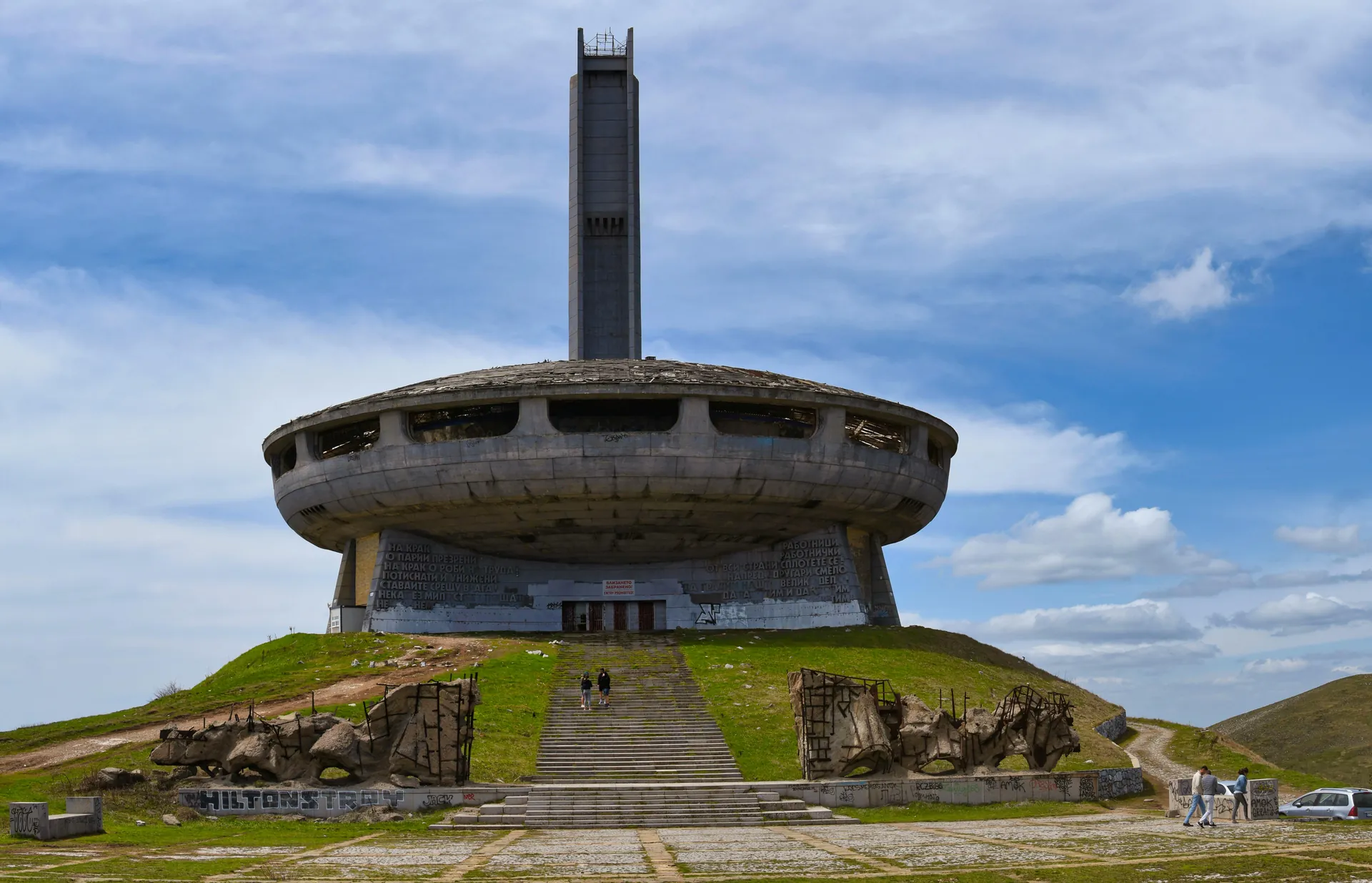
What was the Buzludzha Monument used for? Inaugurated in 1981, it functioned as the ideological headquarters and memorial house for the Bulgarian Communist Party. It was a site of mass rallies, designed to project state power. Following the regime’s collapse in 1989, it was unceremoniously abandoned to the harsh mountain winters. For decades, it stood as a decaying ruin, heavily looted and stripped of its copper roofing.
Today, the site is undergoing critical conservation efforts to stabilize its magnificent interior mosaics. For expatriates, learning about this structure is a rite of passage. Taking a guided day trip to the Buzludzha Monument bridges the gap between their new, quiet village life and the turbulent political history of the 20th century. It is a stark reminder of the complex heritage that defines the modern Bulgarian identity.
“You cannot simply buy a cheap house in the valley and ignore the massive concrete saucer on the mountain. Understanding Buzludzha is the first step to understanding the older generation of Bulgarians who are now your neighbours.”
Practical Challenges: Culture, Climate, and Survival
The transition is rarely seamless. The romantic notion of the ‘slow life’ shatters the moment a new homeowner faces a collapsing roof in November. The harsh winter weather is a logistical hurdle that many new arrivals are simply not prepared for. Sourcing dry firewood, managing frozen pipes, and navigating unploughed mountain roads require grim resilience. You must consult resources like our Safety Guide for Travelers in Bulgaria to understand the realities of winter driving in the Balkans.
Cultural nuances present another steep learning curve. The legendary ‘nod/shake’ confusion—where a shake of the head means yes, and a nod means no—causes endless friction at local hardware stores. Learning the language is paramount. Knowing how to say hi—a cheerful “zdrasti” in informal settings—opens doors that remain firmly shut to arrogant foreigners who expect English to be spoken everywhere.
Are Bulgarians friendly to foreigners? Deeply so, provided you show respect for their customs. Hospitality here is a serious cultural mandate, often expressed through aggressive offerings of homemade rakia.
Living in the countryside brings you face-to-face with the local ecology. While few animals are entirely unique to the country, expats frequently share their gardens with pine martens, European green toads, and the occasional golden jackal howling at dusk. It is a wilder, more untamed environment than the manicured fields of the British home counties.
Social integration is highly successful for those who make the effort. Bulgaria has a long, complex history of cultural crossover. Visitors and expats often wonder about religious tolerance; the country is generally highly welcoming and friendly to Muslims, with a significant ethnic Turkish population and operational mosques throughout the southern and eastern provinces. This diversity enriches the local culture, creating an environment where foreigners of various backgrounds can find acceptance.
Committing to the Transition
Relocating to the far edge of Eastern Europe is an extreme measure. It demands patience to deal with state bureaucracy, physical stamina to maintain rural properties, and the humility to be a permanent guest in someone else’s culture. For the thousands of British citizens who have successfully made the leap, the rewards far outweigh the inconveniences. They have traded the relentless economic pressure of the UK for a life defined by changing seasons, tight-knit village communities, and an overwhelming sense of space.
If you are considering this path, begin by exploring the regions firsthand. Spend time in the mountains during the winter, not just the balmy summer months. Plan your visit carefully, rent a car, and explore the backroads. Speak to the locals, learn the history, and decide if you possess the grit required to call the Balkans your home.
For more insights on blending into local life, review our comprehensive guide on Friendly Bulgaria: A Guide for Foreigners.