
Exploring the Valley of the Roses
Beyond the Concrete Peak: The Dual Soul of the Stara Planina
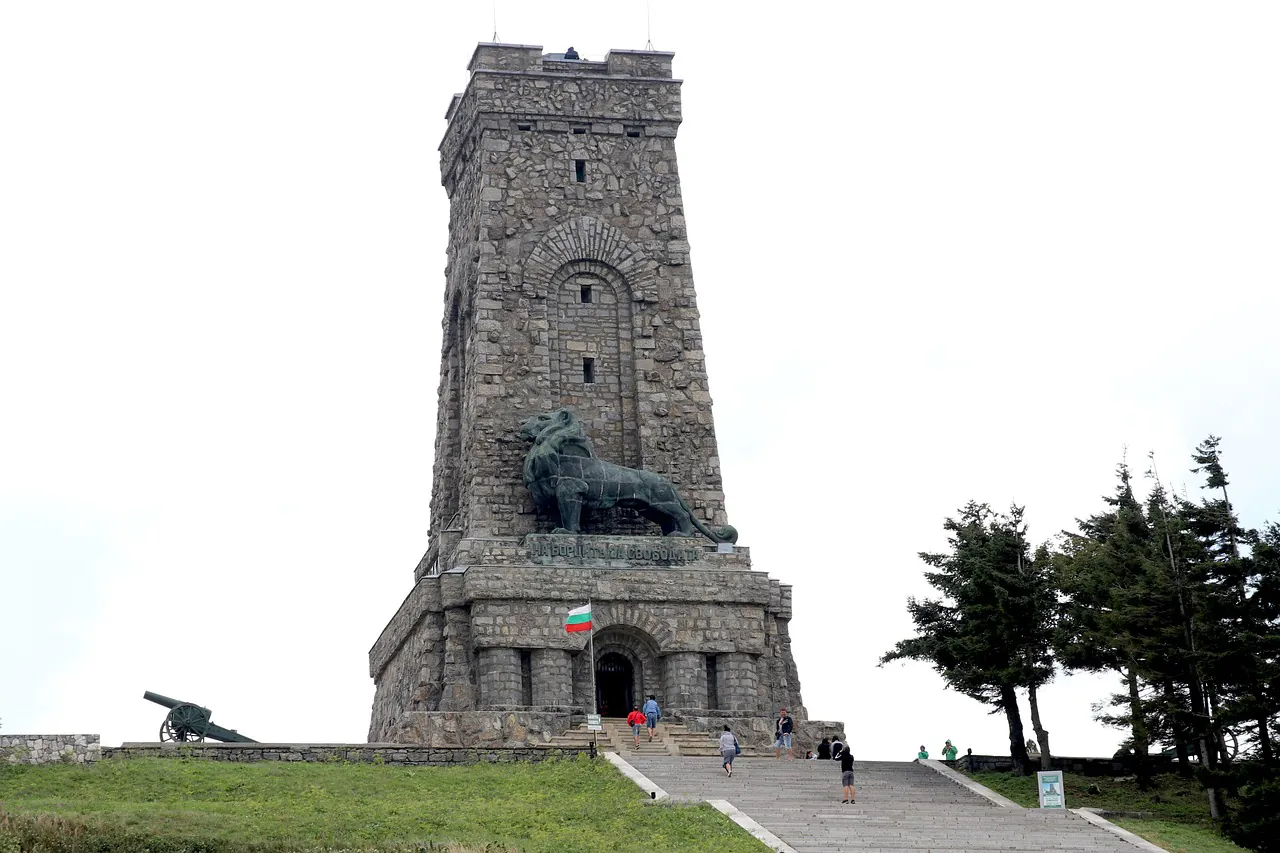
The Stara Planina mountain range defines the geographic and historical spine of Bulgaria, bisecting the nation with sharp peaks and plunging valleys. At its crest sits the Buzludzha Monument, an enormous concrete saucer dominating the skyline. Visitors frequently ask what the Buzludzha Monument was used for. It was originally constructed as a grand ideological assembly hall for the Bulgarian Communist Party, opening in 1981 to project unyielding state power across the Balkans. Tourists often query whether the Buzludzha Monument is abandoned. For decades, it was left to the mercy of brutal alpine winters, decaying into a haunting ruin stripped of its copper roof and red star glass. Today, international conservationists are actively working to stabilise the structure, transforming it from a neglected relic into a managed historical site. You can explore its exterior, trace the faded Cyrillic slogans, and witness the ongoing preservation efforts firsthand.
Yet the brutalist architecture on the summit tells only half the regional story. Plunge southward from the cold, wind-battered peak, and you will find an entirely different reality. This is the Rose Valley—a fertile, fragrant basin anchored by the city of Kazanlak, bordered by the Sredna Gora mountains to the south. The contrast is stark. Above, rigid ideology cast in decaying concrete; below, ancient Thracian tombs and sprawling fields of Rosa Damascena. For travellers looking to extend their journey, pairing the monumental peak with the delicate valley creates a highly layered cultural experience.
The Rose Capital: Kazanlak
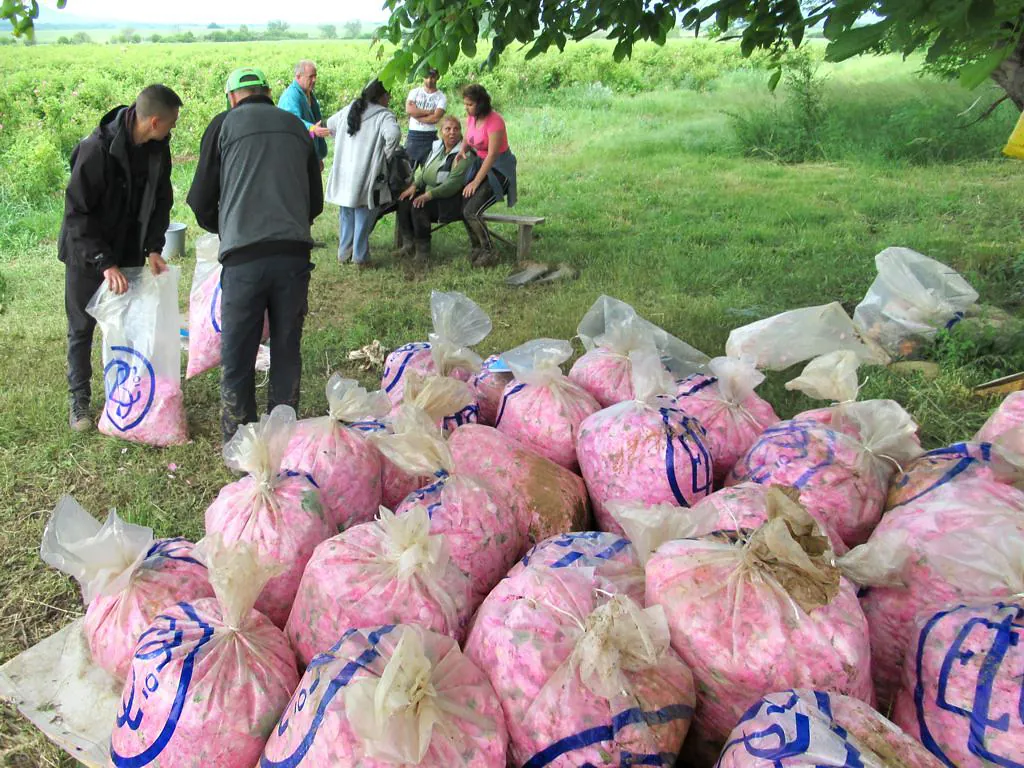
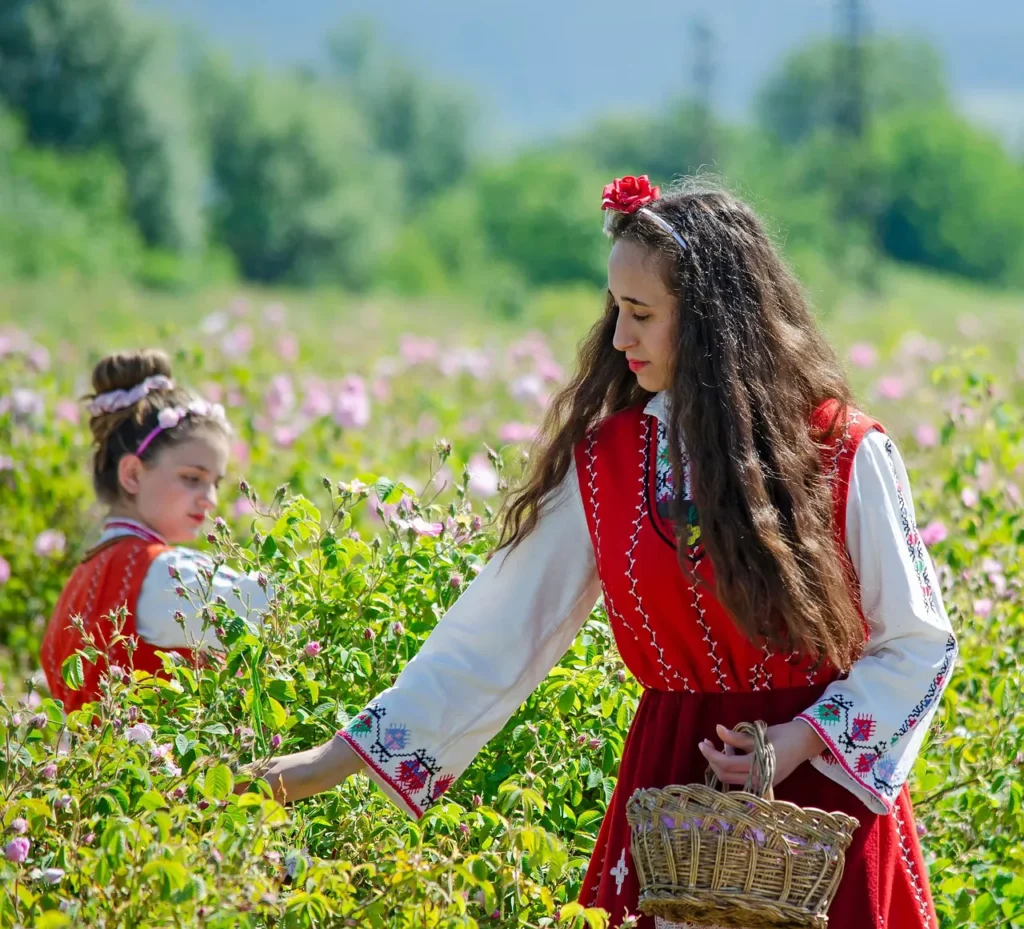
Kazanlak operates as the primary gateway to the valley. It is a functional, working agricultural city that transforms completely during the harvest season. People frequently ask if Bulgaria remains an undiscovered European frontier. It does not. Kazanlak is well-established on the global agricultural map, producing a significant percentage of the world’s rose oil for the luxury perfume industry. Yet the region retains an authenticity that heavily commercialised Mediterranean destinations lack. The streets are unassuming, lined with blocky post-war architecture that gives way abruptly to the sprawling greenery of the surrounding plains. The local economy relies heavily on this short, intense harvest window, making the city a hub of focused activity as spring turns to summer.
The pinnacle of the local calendar is the Festival of the Roses, typically held during teh first two weekends of June. This timing coincides precisely with the peak blooming season, before the intense summer heat sets in. The event features traditional rose-picking rituals starting before dawn, as the flowers must be harvested while still covered in morning dew to preserve their volatile oils. Parades fill the city centre with folklore performances, heavy traditional costumes, and the annual crowning of the Queen of Roses. If you plan to attend, you must book your acommodation months in advance, as the town reaches absolute capacity with international buyers and tourists alike.
The Museum of Roses
Located in Rosarium Park, this is the only facility globally dedicated entirely to the history of rose oil production. The Museum of History Iskra manages the collection, which traces the industry back to the 18th century. Displays include ancient distillation equipment, historical export documents, and original photography of the early harvests. You can examine the intricate testing kits used a century ago to verify the purity of the oil before export to Paris or London. Entrance costs 6 BGN, making it an essential, low-cost educational stop before heading into the fields.
Traditional Distillation
Just a kilometre from the city centre lies the Ethnographic Complex Kulata. Here, visitors can observe traditional rose oil distillation using antique copper vats known as kazans. The process demonstrates the immense labour required to produce the oil—it takes thousands of hand-picked petals to yield a single drop. You can smell the heavy, sweet scent clinging to the wooden rafters of the traditional architecture. The guides run live demonstrations during the summer, showing exactly how wood fires and cold water condensation extract the liquid gold from the crushed petals.
The Thracian Legacy: UNESCO Treasures
Long before the rose fields were planted, this valley was the domain of the Thracian Kings. The density of burial mounds scattered across the plains rivals some of the most famous archaeological sites in Europe, earning it the moniker ‘Valley of the Thracian Kings’. The crown jewel is the Kazanlak Thracian Tomb, a 4th-century BC burial site celebrated for its remarkably preserved Hellenistic-era murals. Recognised by the UNESCO World Heritage Centre, the original tomb is closed to the public to maintain strict climate control. Instead, visitors enter an exact, high-quality replica situated right next to the original in Tyulbeto Park. The frescoes depict a solemn funeral feast, featuring chariot races, galloping horses, and a striking portrait of the deceased ruler holding his wife’s hand. The admission fee is roughly 6 BGN.
Further up the valley, near the town of Shipka, lies the Golyama Kosmatka Tomb. Discovered in 2004, this opulent structure is believed to be the final resting place of King Seuthes III. Walking down the long stone corridor into the burial chamber feels markedly different from the refined artistry of Kazanlak; it is raw, monolithic, and imposing. Archaeologists unearthed an astonishingly detailed bronze head of the king buried just outside the entrance, a piece that has since travelled to museums worldwide. Entry costs around 6 BGN, and its location directly on the route to the Buzludzha Monument makes it an effortless addition to your driving itinerary.
Shipka Memorial Church
At the very base of the Shipka Pass, the golden onion domes of the Shipka Memorial Church rise sharply against the dark green backdrop of the Balkan Mountains. Built to commemorate the Russian, Ukrainian, and Bulgarian soldiers who died during the Russo-Turkish War of 1877–1878, the church is a masterpiece of Russian Revival architecture. The sheer scale of the Central Balkan Mountains surrounding the church is a landscape you can lose yourself in. Its towering 53-metre bell tower houses 17 bells. The largest of these weighs nearly 12 tons and was cast entirely from spent artillery shells gathered from the nearby battlefields.
Entry to the main sanctuary is free, though donations are encouraged to aid in ongoing maintenance. The interior walls bear 34 dark marble plaques inscribed in gold with the names of the fallen regiments. It is a quiet, sombre environment smelling faintly of beeswax candles and frankincense. This religious and historical gravity contrasts heavily with the modernist, secular ambition of the Buzludzha monument situated just a few peaks over.
Seasonal Guide and Culinary Exploration
Timing your visit dictates the type of experience you will have. The golden window for exploring the Valley of the Roses spans from late May to the middle of June. Outside this period, the rose fields are simply green bushes, and the agricultural machinery sits dormant in the barns. The Thracian tombs and the Buzludzha Monument remain compelling year-round regardless of the harvest. If you visit in late autumn, the fog rolling off the mountain pass creates a highly atmospheric, freezing driving experience that makes the brutalist architecture look even more imposing.
Regional cuisine heavily incorporates the local flora, blending sweet floral notes with robust mountain cooking. You must try sladko ot rozi—a traditional, highly fragrant rose jam—or sip on small-batch rose liqueur served over ice. These are not merely tourist novelties; they are staple household items throughout the region. Pair them with standard Balkan fare like hearty kavarma, a slow-cooked pork and vegetable stew baked in a sealed clay pot. Add a side of sharp sirene cheese and a glass of strong homemade rakia for a completely authentic meal. For detailed local event schedules and restaurant recommendations, consult the Official Kazanlak Tourism Portal.
The juxtaposition is striking: high above sits the decaying ambition of a 20th-century regime, while the valley below harvests the exact same flowers it has cultivated for centuries.
The 48-Hour Valley Loop: An Itinerary
To maximise your time, we recommend a two-day circular route starting from Sofia or Plovdiv. If you prefer to bypass the logistics of driving, you can book the Buzludzha Monument and The Rose Valley Day Tour From Sofia, which delivers expert historical context and handles the winding mountain roads for you. For self-guided drivers, follow this structure:
- Day 1, Morning: Arrive in Kazanlak. Visit the Museum of Roses and the replica of the Kazanlak Thracian Tomb in Tyulbeto Park.
- Day 1, Afternoon: Drive to the Ethnographic Complex Kulata to witness the kazans in action. Enjoy a traditional dinner in the city centre.
- Day 2, Morning: Drive north towards the Shipka Pass. Stop at the Golyama Kosmatka Tomb and the Shipka Memorial Church.
- Day 2, Afternoon: Drive the remaining 12 kilometres up the winding mountain roads to the Buzludzha Monument. For a deeper dive into the spaceship-like structure, consider a Self-Guided Audio Experience.
Practical Tips for Travellers
Logistics in this region require careful planning. The distance from Kazanlak to the Buzludzha Monument is approximately 25 to 30 kilometres, climbing significantly in altitude. Because there is absolutely no reliable public transit to the peak, renting a car or hiring a local taxi for the day is mandatory. Verify your brakes are capable, as the descent punishes even modern vehicles.
Foreign visitors often ask what to be careful of in Bulgaria. In the Stara Planina region, the primary hazard is the unpredictable mountain weather. A sunny morning in Kazanlak can rapidly deteriorate into dense fog, heavy rain, or high winds at the peak. Always pack layers and drive defensively on the Shipka Pass, as blind corners and aggressive local overtaking are common. For more detailed driving advice, see our transportation guide.
Cultural integration relies on minor, respectful gestures. Many wonder how to say “hi” in Bulgaria. A simple Zdravey (Здравей) is highly effective and universally appreciated by shopkeepers and museum attendants. Prospective visitors frequently wonder whether Bulgarians are friendly to foreigners. The answer is a definitive yes, though it may not look like it initially. The local demeanour can appear gruff or reserved, but this exterior quickly dissolves into intense, generous hospitality once you initiate a genuine conversation.
Conclusion: A Collision of Eras
The journey from Kazanlak to Buzludzha is essentially a vertical ascent through time. At the basin, you walk among the graves of Hellenistic monarchs and breathe in the scent of an agricultural tradition spanning hundreds of years. Halfway up the mountain, the golden crosses of Shipka mark the brutal 19th-century struggle for national liberation, paid for in blood and artillery shells. Finally, at the summit, the concrete saucer stands as a stark monument to 20th-century ideological ambition and its subsequent collapse. To visit the peak without exploring the valley is to read the final chapter of a book while ignoring the story that built it.