
Eurovision 2027 in Bulgaria… at Buzludzha?
The “Bangaranga” Miracle and the 2027 Host City Race
Bulgarian artist DARA won the 70th Eurovision Song Contest on May 16, 2026. Her track “Bangaranga” secured 516 points, instantly triggering national celebrations across the country. Bulgarian National Television (BNT) Director General Milena Milotinova quickly confirmed the broadcaster’s readiness to host the massive event in 2027, according to statements on the official BNT portal. This announcement ignited an immediate, highly unconventional internet campaign. Fans across Europe bypassed the obvious capital city venues. They pointed their collective attention toward a single, monolithic structure in the Central Balkan Mountains.
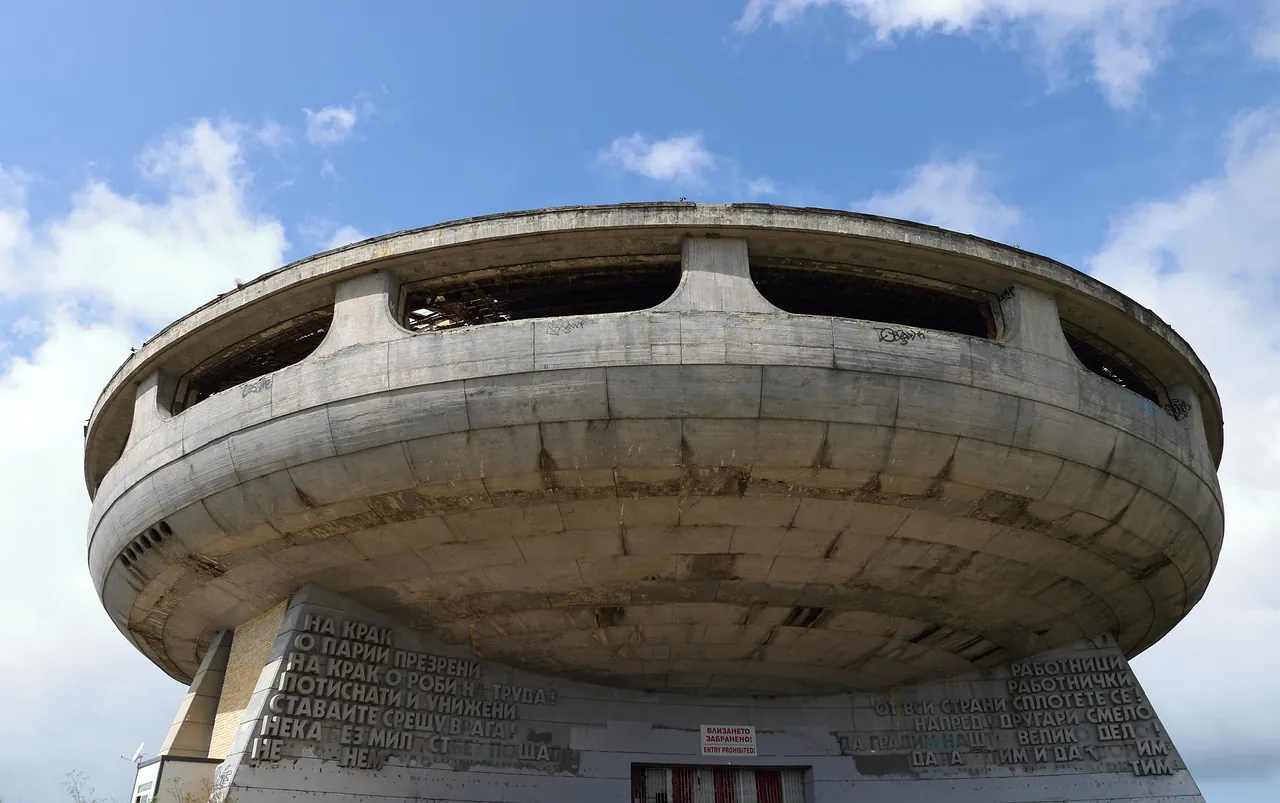
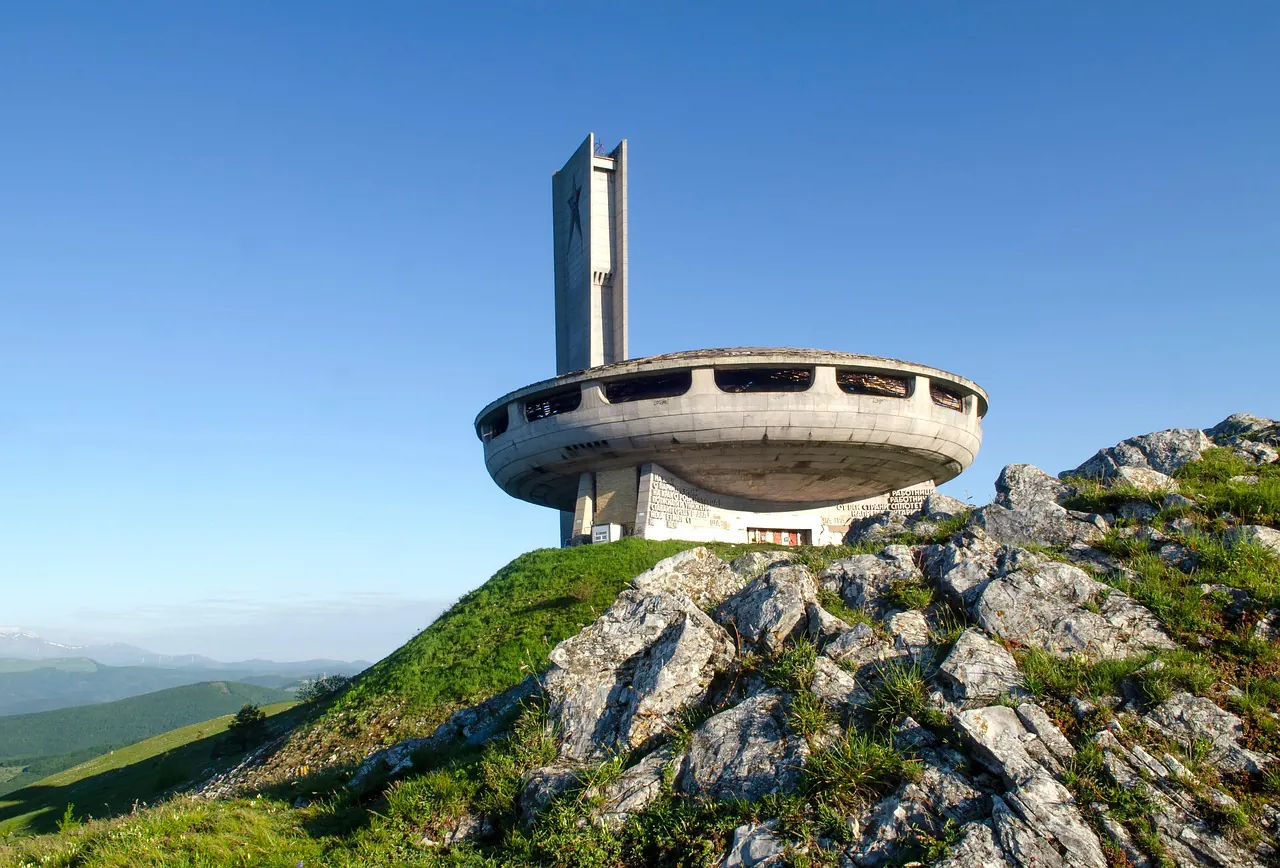
The Buzludzha Monument is a brutalist concrete saucer situated at an altitude of 1,441 metres. It dominates the ridgeline of Buzludzha Peak. The structure looks exactly like a crashed alien spacecraft. The visual appeal for a television production is obvious. The idea of hosting a sequin-drenched pop music competition inside a decaying communist relic captured the public imagination. The reality of executing such an event is entirely different.
The EBU Mandate Versus the Brutalist Contender
The European Broadcasting Union enforces rigid guidelines for any potential host city. The official EBU venue requirements demand a minimum capacity of 10,000 spectators. The chosen arena must have a fully enclosed roof. Organisers require an adjacent press centre capable of supporting 1,500 journalists. The surrounding region must supply at least 3,500 available hotel rooms. The host broadcaster must also secure exclusive access to the venue for eight consecutive weeks leading up to the live broadcasts.
The Buzludzha Monument possesses the sheer physical scale to impress television audiences. It completely fails every logistical requirement. The structure is an active conservation zone. The copper shielding that once protected the massive dome was systematically stripped by looters during the economic turmoil of the 1990s. The building currently has no functioning roof. The interior remains largely exposed to the severe mountain elements.
International conservationists from the Buzludzha Project Foundation have spent years stabilising the site. Backed by emergency grants from the Getty Foundation, architects erected protective canopies over the 924 square metres of interior mosaics. These artworks depict figures like Marx, Engels, and Lenin alongside Bulgarian labourers. The interior is strictly closed to the public for safety reasons. You can read more about these efforts on our Restoration & Current Status page. Transforming this delicate, hazardous ruin into a broadcast-ready arena is a logistical nightmare that the regional infrastructure is just not prepared for.
The Altitude Factor and Unpredictable Alpine Weather
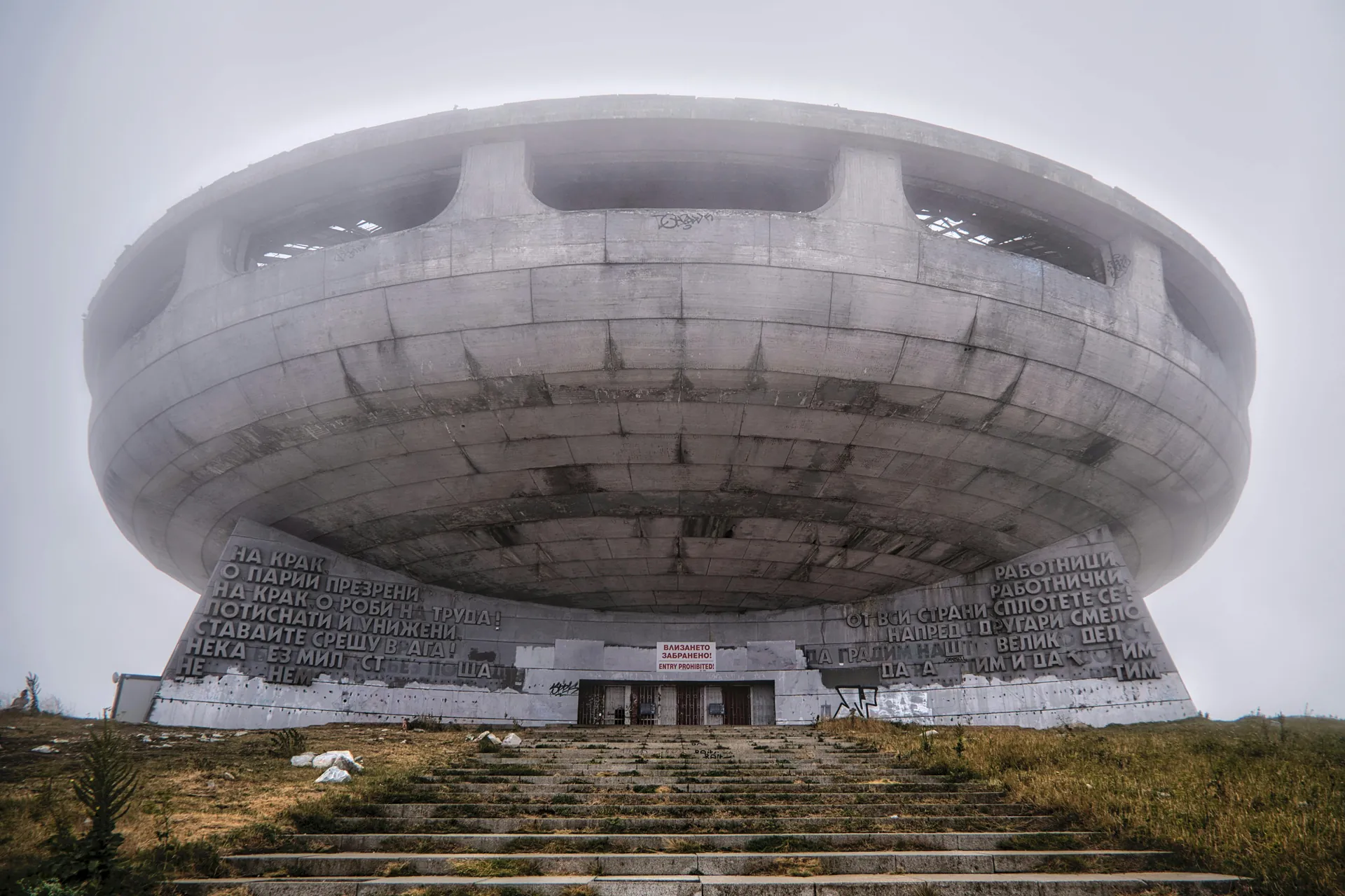
May weather in the Central Balkan Mountains is highly volatile. The monument sits at 1,441 metres above sea level. It is entirely exposed to the elements. The peak frequently endures howling alpine winds. Dense, ghostly fog regularly swallows the massive concrete saucer and its towering 70-metre pylon. Fast-moving cloud systems can drop temperatures to near freezing, even in late spring.
Eurovision relies on absolute precision. Buzludzha offers unpredictable, often hostile mountain weather that defies scheduling.
A global live broadcast requires total environmental control. Moving thousands of fans, performers, and technical crew members through a high-altitude fog bank presents immense safety risks. The surrounding terrain consists of rugged, unpaved alpine ridges. The concrete plaza surrounding the monument is heavily degraded. It becomes a major slip hazard when coated in rain or late-season frost. These environmental factors alone eliminate the peak as a viable host location.
The Logistics of 10,000 Fans and the Accommodation Deficit
Transit to the monument is notoriously complex. The site is geographically isolated. It sits approximately 193 kilometres east of Sofia. The nearest major urban centre is the city of Kazanlak, located 24.5 kilometres to the south in the Valley of Roses. There is absolutely no public transport connecting Kazanlak directly to the peak.
The approach requires driving up the winding Buzludzha Pass. This mountain road branches off from the historic Shipka Pass (Route I-5). The asphalt is heavily curved. It lacks proper guardrails in several steep sections. Local drivers know to avoid the direct northern ridge route from Gabrovo entirely, as that specific stretch is often impassable due to massive potholes. Routing thousands of commercial buses and broadcast trucks up these degraded roads is physically impossible.
The Hotel Shortage
Kazanlak is a highly capable regional hub. It boasts excellent infrastructure for independent digital nomads and casual tourists. It cannot absorb the 3,500 hotel rooms required by the EBU. The nearest settlements, like the small town of Shipka, offer boutique local accommodations. They do not have the volume to house international delegations, press pools, and thousands of fans.
The Financial Reality
Public broadcasting finances are finite. Constructing a billion-dollar temporary infrastructure project atop a remote mountain peak makes no economic sense. BNT operates with a set annual budget. The cost of laying fibre-optic cables, building temporary access roads, and installing a temporary roof over the monument would bankrupt the production before the first song played.
The Real Candidates: Arena Sofia and Arena Burgas
The 2027 host city race will ultimately come down to existing, compliant infrastructure. Arena Sofia is the undisputed frontrunner. It holds a maximum capacity of 17,906 spectators. The venue sits minutes away from Sofia International Airport. It has a proven track record, having successfully hosted the Junior Eurovision Song Contest in 2015. The capital city possesses the vast hotel inventory and public transit network necessary for a massive influx of international visitors.
Arena Burgas presents a compelling alternative. This coastal venue offers a capacity of 15,000. Hosting the event by the Black Sea would provide a brilliant aesthetic contrast to previous contests. Both arenas satisfy the EBU mandate perfectly. They offer enclosed roofs, expansive press facilities, and immediate proximity to major transport hubs.
How to Actually Experience Buzludzha
The Balkan UFO will remain a monument. It is one of the most arresting architectural sites in Eastern Europe. The House-Monument of the Bulgarian Communist Party was inaugurated in 1981 to commemorate the 1891 founding of the Bulgarian Social Democratic Workers’ Party. The state abandoned the structure in 1989. It spent three decades deteriorating into a dystopian ruin before recent conservation efforts began.
Visiting the site today requires careful planning. The interior is entirely closed to the public. You can view the exterior plaza and the sweeping 360-degree mountain perimeter 24/7 without paying an entrance fee. To fully appreciate the brutalist design against the natural landscape, make sure you take teh time to walk the entire perimeter during the early morning or late afternoon.
Transport Strategies for Independent Travellers
Guided day trips remain the most reliable method for reaching the peak from the capital. Operators like Traventuria offer comprehensive small-group tours departing from Sofia. These trips typically cost around 60 EUR. They include English-speaking guides and secure transport up the steep mountain passes. Many bookable tour options bundle the monument with a visit to the Ethnographic Complex Damascena, allowing visitors to experience the traditional production of Bulgarian rose oil.
Independent travellers on a budget can rely on the domestic railway network. The Bulgarian Railways (BDZh) operates regular intercity trains from Sofia Central Station to Kazanlak. The journey takes just over three hours. Standard tickets range from 11 BGN to 14 BGN. Upon arriving in Kazanlak, visitors face a transit gap. There is no public bus to the peak.
Always secure a return rate with Kazanlak taxi drivers before leaving the station. Mobile service is highly unreliable at the monument’s altitude.
You must hire a local taxi for the final 24.5-kilometre ascent. The official rate for a one-way trip should fall between 23 BGN and 30 BGN. Some unmetered drivers attempt to quote flat rates as high as 195 BGN for foreign tourists. Firm negotiation is necessary. Bulgarians are exceptionally welcoming and friendly to foreigners. A polite greeting like “Zdrasti” (hi) sets a positive tone for fare discussions. You can find more specific advice on navigating local interactions in our guide for foreigners.
Safety on the Mountain
The monument is heavily guarded. A permanent police booth is stationed directly at the entrance. The authorities enforce a strict 24/7 rotation to prevent illegal entry into the hazardous interior. The concrete ceiling is in active danger of localised collapses. Falling debris and exposed rusted rebar pose genuine physical threats. Attempting to bypass the security perimeter results in heavy fines.
The surrounding terrain demands proper footwear. The concrete stairs leading up from the small parking area are uneven and degraded. The unpaved alpine ridge requires sturdy hiking boots. During the winter months, the road up Buzludzha Pass is frequently covered in black ice. Standard rental cars cannot make the climb safely in these conditions. Review our comprehensive safety guide before attempting the drive between December and March.
The Ultimate Stage Backdrop
The campaign to host Eurovision at Buzludzha is rooted in aesthetic appreciation. The structure possesses a cinematic quality that no modern arena can replicate. The juxtaposition of the brutalist concrete behemoth against the sweeping beauty of the Kazanlak Valley creates profound visual friction.
The site does occasionally host large-scale events that utilise its striking facade. The annual Open Buzludzha Festival transforms the monument’s exterior into a massive canvas for 3D mapping light shows. Live music and cultural workshops take place in the adjacent meadows near the Buzludzha Hut. This festival raises critical funds for ongoing conservation efforts. It proves that the site can support thousands of visitors when the infrastructure is handled responsibly in the summer months.
Buzludzha will never see the glitter, pyrotechnics, and global broadcast trucks of the Eurovision Song Contest. It remains a silent, wind-battered relic atop a remote Balkan peak. The concrete saucer stands as a complex historical marker. It is a place for urban explorers, architectural historians, and curious travellers willing to navigate the winding mountain passes. Arena Sofia will likely host the television spectacle. Buzludzha will continue to host the clouds.